Friday, 3 October 2014

Auditory hallucination


From Wikipedia, the free encyclopedia  Blogger Ref http://www.p2pfoundation.net/Multi-Dimensional_Science

Jump to: navigation, search
paracusia
Classification and external resources
ICD-10R44.0
ICD-9780.1
A paracusia, or auditory hallucination,[1] is a form of hallucination that involves perceiving sounds without auditory stimulus.
A common form of auditory hallucination involves hearing one or more talking voices. This may be associated with psychotic disorders such as schizophrenia or mania, and holds special significance in diagnosing these conditions.[2] However, individuals may hear voices without suffering from diagnosable mental illness.[3]
There are three main categories into which the hearing of talking voices can often fall: a person hearing a voice speak one's thoughts, a person hearing one or more voices arguing, or a person hearing a voice narrating his/her own actions.[4] These three categories do not account for all types of auditory hallucinations.
Other types of auditory hallucination include exploding head syndrome and musical ear syndrome. In the latter, people will hear music playing in their mind, usually songs they are familiar with. Reports have also mentioned that it is also possible to get musical hallucinations from listening to music for long periods of time.[5] This can be caused by: lesions on the brain stem (often resulting from a stroke); also, sleep disorders such as narcolepsy, tumors, encephalitis, or abscesses.[6] Other reasons include hearing loss and epileptic activity.[7]


Famous examples[edit]

Robert Schumann, a famous music composer, spent the end of his life experiencing auditory hallucinations. Schumann’s diaries state that he suffered perpetually from imagining that he had the note A5 sounding in his ears. The musical hallucinations became increasingly complex. One night he claimed to have been visited by the ghost of Schubert and wrote down the music that he was hearing. Thereafter, he began making claims that he could hear an angelic choir singing to him. As his condition worsened, the angelic voices transmogrified into demonic voices.[8]
Joan of Arc claimed to hear the voices of Saints who were the force that guided her and was resolved to obey these messages as she believed they were sent directly from God. She first began hearing voices when she was thirteen and soon after had visions of St. Michael, St. Catherine and St. Margaret.[8]

Individual accounts[edit]

The onset of delusional thinking is most often described as being gradual and insidious. Patients described an interest in psychic phenomena progressing to increasingly unusual preoccupations and then to bizarre beliefs "in which I believed wholeheartedly". One author wrote of their hallucinations: "they deceive, derange and force me into a world of crippling paranoia". In many cases, the delusional beliefs could be seen as fairly rational explanations for abnormal experiences: "I increasingly heard voices (which I'd always call ‘loud thoughts’)... I concluded that other people were putting these loud thoughts into my head".[9] Some cases have been described as an "auditory ransom note".

History[edit]

Ancient history[edit]

Presentation[edit]

The ancient world viewed hallucinations as it did most of the natural world, with awe and superstition. As such, it was viewed as either a gift or curse by God, or the gods (depending on the specific culture). The oracles of ancient Greece were known to experience auditory hallucinations while breathing in certain neurologically active vapors, while the more pervasive delusions and symptomology were often viewed as possession by demonic forces as punishment for misdeeds.[8]

Treatments[edit]

Treatment in the ancient world is ill documented, but there are some cases of therapeutics being used to attempt treatment, while the common treatment was sacrifice and prayer in an attempt to placate the gods. The Dark Ages saw the most horrific accounts where the sufferers of auditory hallucinations were subjected to trepanning or trial as a witch.[8] In other cases of extreme symptomatology individuals were seen as being reduced to animals by a curse, these individuals were either left on the streets or imprisoned in insane asylums. It was the latter response that eventually led to modern psychiatric hospitals.[10]

Pre-modern[edit]

Presentation[edit]

Auditory hallucinations were rethought during the enlightenment. As a result, the predominant theory in the western world beginning in the late 18th century was that auditory hallucinations were the result of a disease in the brain (e.g. mania), and treated as such.[10]

Treatments[edit]

There were no effective treatments for hallucinations at this time. Conventional thought was that clean food, water, and air would allow the body to heal itself (Sanatorium). Beginning in the 16th century Insane Asylums were first introduced in order to remove “the mad dogs” from the streets and left them chained to walls and living in their own filth.[10] These asylums acted as prisons until the late 18th century. This is when doctors began the attempt to treat patients. Often attending doctors would douse patients in cold water, starve them, or spin patients on a wheel. Soon, this gave way to brain specific treatments with the most famous examples including Lobotomies, shock therapy and branding the skull with hot iron.[10]

Potential causes[edit]

Associated diseases[edit]

The premier cause of auditory hallucinations in the case of psychotic patients is schizophrenia. In those cases, patients show a consistent increase in activity of the thalamic and strietal subcortical nuclei, hypothalamus, and paralimbic regions; confirmed via PET scan and fMRI.[11][12] Other research shows an enlargement of temporal white matter, frontal gray matter, and temporal gray matter volumes (those areas crucial to both inner and outer speech) when compared to control patients.[13][14] This implies both functional and structural abnormalities in the brain can induce auditory hallucinations, both of which may have a genetic component.[15][16][17] Mood disorders have also been known to cause auditory hallucinations, but tend to be milder than their psychosis induced counterpart.

Non-disease associated causes[edit]

Auditory hallucinations have been known to manifest as a result of intense stress, sleep deprivation, drug use, and errors in development of proper psychological processes.[clarification needed][18] Genetic correlation has been identified with auditory hallucinations,[17] but most work with non-psychotic causes of auditory hallucinations is still ongoing.[18][19]
High caffeine consumption has been linked to an increase in the likelihood of experiencing auditory hallucinations. A study conducted by the La Trobe University School of Psychological Sciences revealed that as few as five cups of coffee a day could trigger the phenomenon.[20]

Diagnosis and treatments[edit]

Pharmaceuticals[edit]

The primary means of treating auditory hallucinations is antipsychotic medications which affect dopamine metabolism. If the primary diagnosis is a mood disorder (with psychotic features), adjunctive medications are often used (e.g., antidepressants or mood stabilizers). These medical approaches may allow the person to function normally but are not a cure as they do not eradicate the underlying thought disorder. [21]

Psychological therapies[edit]

Cognitive-Behavioral Therapy has been shown to help decrease the frequency and distressfulness of auditory hallucinations, particularly when other psychotic symptoms were presenting.[22] Enhanced Supportive Therapy has been shown to reduce the frequency of auditory hallucinations, the violent resistance the patient displayed towards said hallucinations, and an overall decrease in the perceived malignancy of the hallucinations.[22] Other cognitive and behavioral therapies have been used with mixed success.[23][24]

Non-conventional therapies[edit]

Electroconvulsive therapy or ECT has been shown to reduce psychotic symptoms associated with schizophrenia[citation needed], mania, and depression, and is often used in psychiatric hospitals.
In recent years, repetitive transcranial magnetic stimulation (rTMS) has been studied as a biological method of treatment for auditory hallucinations. rTMS plays a role in altering neural activity over language cortical regions. Studies have shown that when rTMS is used as an adjunct to antipsychotic medication in treatment-resistant cases, the frequency and severity of auditory hallucinations can be reduced.[25]
Another source of non-conventional techniques to cope with the voices are provided by the research and findings of the Hearing Voices Movement[26]

Ongoing research[edit]

Non-psychotic symptomology[edit]

There is on-going research that supports the prevalence of auditory hallucinations, with a lack of other conventional psychotic symptoms (such as delusions, or paranoia), particularly in pre-pubertal children.[27] These studies indicate a remarkably high percentage of children (up to 14% of the population sampled[28]) experienced sounds or voices without any external cause, though it should also be noted that "sounds" are not considered by psychiatrists to be examples of auditory hallucinations. Differentating actual auditory hallucinations from "sounds" or a normal internal dialogue is important since the latter phenomena are not indicative of mental illness.

Causes[edit]

The causes of auditory hallucinations are unclear.
Dr. Charles Fernyhough, of the University of Durham poses one theory among many but stands as a reasonable example of the literature. Given standing evidence towards involvement of the inner voice in auditory hallucinations,[29] he proposes two alternative hypotheses on the origins of auditory hallucinations in the non-psychotic. They both rely on an understanding of the internalization process of the inner voice.[18][28][30]

Internalization of the inner voice[edit]

The internalization process of the inner voice is the process of creating an inner voice during early childhood, and can be separated into four distinct levels.[18][28][30]
Level one (external dialogue) involves the capacity to maintain an external dialogue with another person, i.e. a toddler talking with their parent(s).
Level two (private speech) involves the capacity to maintain a private external dialogue, as seen in children voicing the actions of play using dolls or other toys.
Level three (expanded inner speech) is the first internal level in speech. This involves the capacity to carry out internal monologues, as seen in reading to oneself, or going over a list silently.
Level four (condensed inner speech) is the final level in the internalization process. It involves the capacity to think in terms of pure meaning without the need to put thoughts into words in order to grasp the meaning of the thought.

Disruption to internalization[edit]

A disruption could occur during the normal process of internalizing ones’ inner voice, where the individual would not interpret their own voice as belonging to them; a problem that would be interpreted as level one to level four error.[18][28][30]

Re-expansion[edit]

Alternatively, the disruption could occur during the process of re-externalizing ones inner voice, resulting in an apparent second voice that seems alien to the individual; a problem that would be interpreted as a level four to level one error.[18][28][30]

Treatments[edit]

Psychopharmacological treatments include anti-psychotic medications. Psychology research shows that first step in treatment is for the patient to realize that the voices they hear are creation of their own mind. This realization is argued to allow patients to reclaim a measure of control over their lives. Some additional psychological interventions might allow for the process of controlling these phenomena of auditory haliucinations but more research is needed.[18]

See also[edit]

References[edit]

  1. Jump up ^ "Medical dictionary". 
  2. Jump up ^ Yuhas, Daisy. "Throughout History, Defining Schizophrenia Has Remained A challenge". Scientific American Mind (March 2013). Retrieved 2 March 2013. 
  3. Jump up ^ Thompson, Andrea (September 15, 2006). "Hearing Voices: Some People Like It". LiveScience.com. Archived from the original on 2 November 2006. Retrieved 2014-02-01. 
  4. Jump up ^ Semple,David."Oxford hand book of psychiatry" Oxford press, 2005
  5. Jump up ^ Young, Ken (July 27, 2005). "IPod hallucinations face acid test". Vnunet.com. Archived from the original on 2007-12-20. Retrieved 2008-04-10. 
  6. Jump up ^ "Rare Hallucinations Make Music In The Mind". ScienceDaily.com. August 9, 2000. Archived from the original on 5 December 2006. Retrieved 2006-12-31. 
  7. Jump up ^ Engmann, Birk; Reuter, Mike: Spontaneous perception of melodies – hallucination or epilepsy? Nervenheilkunde 2009 Apr 28: 217-221. ISSN 0722-1541
  8. ^ Jump up to: a b c d Laqueur, Thomas (2007-09-03). "Spirited Away". pp. 36–42. 
  9. Jump up ^ Stanton, Biba (2000). "First-person accounts of delusions". Psychiatric Bulletin 20 (9): 333–336. doi:10.1192/pb.24.9.333. 
  10. ^ Jump up to: a b c d Boyer, Paul S: "Insane Asylums." The Oxford Companion to United States History. Oxford University Press. 2001. Encyclopedia.com. 22 Nov. 2009
  11. Jump up ^ Silbersweig, D.A.; Stern, E; Frith, C; Cahill, C; Holmes, A; Grootoonk, S; Seaward, J; McKenna, P; Chua, SE; Schnorr, L.; Jones, T.; Frackowiak, R. S. J. (1995). "A functional neuroanatomy of hallucinations in schizophrenia". Nature 378 (6553): 176–179. doi:10.1038/378176a0. PMID 7477318. 
  12. Jump up ^ SHERGILL, SUKHWINDER S.; Nenadic, I; Volz, HP; Büchel, C; Sauer, H (2004). "Neuroanatomy of 'Hearing Voices': A Frontotemporal Brain Structural Abnormality Associated with Auditory Hallucinations in Schizophrenia". Cerebral Cortex 14 (1): 91–96. doi:10.1093/cercor/bhg107. PMID 14654460. 
  13. Jump up ^ Shin, Sang-Eun; Lee, J; Kang, M; Kim, C; Bae, J; Jung, G (2005). "Segmented volumes of cerebrum and cerebellum in first episode schizophrenia with auditory hallucinations". Psychiatry Research: Neuroimaging 138: 33–42. doi:10.1016/j.pscychresns.2004.11.005. 
  14. Jump up ^ SHERGILL, SUKHWINDER S.; Brammer, MJ; Fukuda, R; Williams, SC; Murray, RM; McGuire, PK (2003). "Temporal course of auditory hallucinations". British Journal of Psychiatry 182 (6): 525–531. doi:10.1192/bjp.182.6.525. PMID 12777344. 
  15. Jump up ^ Boksa, Patricia (2009). "On the neurobiology of hallucinations". J Psychiatry Neuroscience 34 (4): 260–262. 
  16. Jump up ^ Spencer, Kevin M; Niznikiewicz, Margaret A; Nestor, Paul G; Shenton, Martha E; McCarley, Robert W (2009). "Left auditory cortex gamma synchronization and auditory hallucination symptoms in schizophrenia". BMC Neuroscience 10: 1–13. doi:10.1186/1471-2202-10-85. 
  17. ^ Jump up to: a b Hugdahl, Kenneth (2008). "Auditory hallucinations in schizophrenia: the role of cognitive, brain structural and genetic disturbances in the left temporal lobe". Frontiers in Human Neuroscience 1: 1–10. doi:10.3389/neuro.09.006.2007. 
  18. ^ Jump up to: a b c d e f g Fernyhough, Charles; Jones, Simon R.: “Thinking Aloud About Mental Voices”
  19. Jump up ^ Stip, Emmanuel (2009). "Psychotic Symptoms as a Continuum Between Normality and Pathology". The Canadian Journal of Psychiatry 54: 140–151. 
  20. Jump up ^ Medical News Today: "Too Much Coffee Can Make You Hear Things That Are Not There"
  21. Jump up ^ Barker,P. (2009) Psychiatric and Mental Health Nursing- The craft of caring. 2nd Edition. England: Hodder Arnold.
  22. ^ Jump up to: a b Penn, David L.; Meyer, PS; Evans, E; Wirth, RJ; Cai, K; Burchinal, M (2008). "Professional A randomized controlled trial of group cognitive-behavioral therapy vs. enhanced supportive therapy for auditory hallucinations". Schizophrenia Research 109 (1–3): 52–59. doi:10.1016/j.schres.2008.12.009. PMID 19176275. 
  23. Jump up ^ HAYASHI, NAOKI md, phd; IGARASHI, YOSHITO md; SUDA, KIYOKO md; NAKAGAWA, SEISHU md: Auditory hallucination coping techniques and their relationship to psychotic symptomatology Psychiatry and Clinical Neurosciences 61” 2007: 640–645
  24. Jump up ^ Shergill, Sukhwinder S.; Murray, RM; McGuire, PK (1998). "Auditory hallucinations: a review of psychological treatments". Schizophrenia Research 32 (3): 137–150. doi:10.1016/S0920-9964(98)00052-8. PMID 9720119. 
  25. Jump up ^ Waters F. Auditory hallucinations in psychiatric illness. Psychiatric Times. 2010;27(3):54-58.
  26. Jump up ^ see Intervoice
  27. Jump up ^ Askenazy, Florence L.; Lestideau, Karine; Meynadier, Anne; Dor, Emmanuelle; Myquel, Martine; Lecrubier, Yves (2007). "Auditory hallucinations in pre-pubertal children: A one-year follow-up, preliminary findings". European Child Adolescence Psychiatry 16 (6): 411–415. doi:10.1007/s00787-006-0577-9. 
  28. ^ Jump up to: a b c d e Jones, Simon R.; Fernyhough, C (2007). "Neural correlates of inner speech and auditory verbal hallucinations: A critical review and theoretical integration". Clinical Psychology Review 27 (2): 140–154. doi:10.1016/j.cpr.2006.10.001. PMID 17123676. 
  29. Jump up ^ ALLEN, PAUL; Aleman, Andre; McGuire, Philip K. (2007). "Inner speech models of auditory verbal hallucinations: Evidence from behavioural and neuroimaging studies". International Review of Psychiatry 19 (4): 409–417. doi:10.1080/09540260701486498. 
  30. ^ Jump up to: a b c d Fernyhough, Charles (2004). "Alien voices and inner dialogue: towards a developmental account of auditory verbal hallucinations". New Ideas in Psychology 22: 49–68. doi:10.1016/j.newideapsych.2004.09.001. 

Further reading[edit]

External links[edit]

Hearing Voices Movement


From Wikipedia, the free encyclopedia
   
The Hearing Voices Movement is the name used by organisations and individuals advocating the "hearing voices approach",[1] an alternative way of understanding the experience of those people who "hear voices". In the medical professional literature, ‘voices’ are most often referred to as auditory hallucinations or ‘verbal’ hallucinations. The movement uses the term ‘voices’ which, it feels, is a more accurate and ‘user-friendly’ term.
The movement was instigated by Marius Romme, Sandra Escher and Patsy Hage [2] in 1987.
The movement challenges the notion that to hear voices is necessarily a characteristic of mental illness. Instead it regards hearing voices as a meaningful and understandable, although unusual, human variation. It therefore rejects the stigma and pathologisation of hearing voices and advocates human rights, social justice and support for people who hear voices that is empowering and recovery focussed [3][4] (see the Melbourne Hearing Voices Declaration). The movement thus challenges the medical model of mental illness, specifically the validity of the schizophrenia construct.[5]


History and tenets[edit]

The international Hearing Voices Movement is a prominent mental health service-user/survivor movement that promotes the needs and perspectives of experts by experience in the phenomenon of hearing voices (auditory verbal hallucinations). The main tenet of the Hearing Voices Movement is the notion that hearing voices is a meaningful human experience
The Hearing Voices Movement [6] was established in 1987 by Romme and Escher, both from the Netherlands, with the formation of Stichting Weerklank (Foundation Resonance), a peer led support organisation for people who hear voices. In 1988, the Hearing Voices Network was established in England with the active support of Romme.[7] Since then, networks have been established in 29 countries including Australia, Austria, Belgium, Bosnia, Canada, Denmark, England, Finland, France, Hungary, Germany, Greece, Ireland, Italy, Japan, Kenya, Palestine, Malaysia, New Zealand, Netherlands, Norway, Northern Ireland, Scotland, Sweden, Switzerland, Tanzania, Uganda, USA and Wales.[8]
In 1997, a meeting of voice hearers, family members and mental health workers was held in Maastricht, Netherlands to consider how to organise internationally further research and work about the subject of voice hearing. The meeting decided to create a formal organizational structure to provide administrative and coordinating support to the wide variety of initiatives in the different involved countries.
The organisation is structured as a network and is called INTERVOICE (The International Network for Training, Education and Research into Hearing Voices). INTERVOICE was incorporated in 2007 as a non-profit company and charity under UK law. The president is Maris Romme and the governing body is made up of people who hear voices and mental health professionals.
INTERVOICE hosts the annual World Hearing Voices Congress and an annual World Hearing Voices Day held on the 14th September. It has an international research committee, encourages and supports exchanges and visits between member countries, the translation and publication of books and other literature on the subject of hearing voices.
INTERVOICE is supported by people who hear voices, relatives, friends and mental health professionals including therapists, social workers, nurses, psychiatrists and psychologists. INTERVOICE members believe that the most important factor in the success of their approach is the importance placed on the personal engagement of the people involved, meaning that all participants are considered an expert of their own experience.Membership
The Hearing Voices Movement regards itself and is regarded by others as being a post-psychiatric organisation.[9] [10] It positions itself outside of the mental health world in recognition that voices are an aspect of human difference, rather than a mental health problem. One of the main issues of concern for the Hearing Voices Movement is human rights.
The Hearing Voices Movement also seeks holistic health solutions to problematic and overwhelming voices that cause mental distress. Based on their research,[11] the movement espouses that many people successfully live with their voices. In themselves voices are not seen as the problem. Rather it is the relationship the person has with their voices that is regarded as the main issue.[12][13]
The Hearing Voices Movement is actively developing interventions for mental health practitioners to support people who hear voices and are overwhelmed by the experience [14][15][16]

Position[edit]

The position of the hearing voices movement can be summarised as follows:[17]
  • Hearing voices is not in itself a sign of mental illness.
  • Hearing voices is experienced by many people who do not have symptoms that would lead to diagnosis of mental illness.
  • Hearing voices is often related to problems in life history.
  • If hearing voices causes distress, the person who hears the voices can learn strategies to cope with the experience. Coping is often achieved by confronting the past problems that lie behind the experience.

Theoretical Overview[edit]

The work of Romme, Escher and other researchersl[18][19][20][21][22][23] provides a theoretical framework for the movement. They find that:
  1. Not everyone who hears voices becomes a patient. Over a third of 400 voice hearers in the Netherlands they studied had not had any contact with psychiatric services. These people either described themselves as being able to cope with their voices and/or described their voices as life enhancing.[24]
  2. Demographic (epidemiological) research carried out over the last 120 years provides evidence that there are people who hear voices in the general population (2% - 6%) who are not necessarily troubled by them [25][26][27][28][29]). Only a small minority fulfil the criteria for a psychiatric diagnosis and, of those, only a few seek psychiatric aid.[30] indicating that hearing voices in itself is not necessarily a symptom of an illness.[31] Even more (about 8%) have peculiar delusions and do so without being ill.
  3. People who cope well with their voices and those who did not, show clear differences in terms of the nature of the relationship they had with their voices.[32]
  4. People who live well with their voice experience use different strategies to manage their voices than those voice hearers who are overwhelmed by them.[33][34]
  5. 70% of voice hearers reported that their voices had begun after a severe traumatic or intensely emotional event,[35][36][37][38] such as an accident, divorce or bereavement, sexual or physical abuse, love affairs, or pregnancy.[39] Romme and colleagues found that the onset of voice hearing amongst a patient group was preceded by either a traumatic event or an event that activated the memory of an earlier trauma.[40][41]
  6. Specifically, there is a high correlation between voice hearing and abuse.[42] These findings are being substantiated further in on-going studies with voice hearing amongst children.[43][44]
  7. Some people who hear voices have a deep need to construct a personal understanding for their experiences and to talk to others about it without being designated as mad.
Romme, colleagues and other researchers find that people who hear voices can be helped using cognitive behaviour therapy (CBT)[45] and self-help methods.[46]
Romme theorizes a three phase model of recovery:[47]
  • Startling – Initial confusion; emotional chaos, fear, helplessness and psychological turmoil.
  • Organization – The need to find meaning, arrive at some understanding and acceptance. The development of ways of coping and accommodating voices in everyday living. This task may take months or years and is marked by the attempt to enter into active negotiation with the voice(s).
  • Stabilisation – The establishment of equilibrium, and accommodation, with the voice(s), and the consequent re-empowerment of the person.

Alternative to medical model of disability[edit]

The Hearing Voices Movement disavows the medical model of disability and disapproves of the practises of mental health services through much of the Western World, such as treatment solely with medication.[48] For example, some service users have reported negative experiences of mental health services because they are discouraged from talking about their voices as these are seen solely as symptoms of psychiatric illness.[49][50][51][52] Slade and Bentall conclude that the failure to attend to hallucinatory experiences and/or have the opportunity for dialogue about them is likely to have the effect of helping to maintain them.[53]
In Voices of Reason, Voices of Insanity, Leudar and Thomas review nearly 3,000 years of voice-hearing history, including that of Socrates, Schreber, and Janet's patient 'Marcelle', amongst others.[54] As with Smith [55] and Watkins[56] they argue that the Western World has moved the experience of hearing voices from a socially valued context to a pathologised and denigrated one. Foucault has argued that this process can generally arise when a minority perspective is at odds with dominant social norms and beliefs.[57]

See also[edit]

Publications[edit]

  • Romme, M. Escher, S. (1993) Accepting Voices. Mind Publications
  • Baker, P. (1995, 2011), The Voice Inside, P&P Publications
  • Romme, M. Escher, S. (Eds) (1996) Understanding voices: coping with auditory hallucinations and confusing realities, Rijksuniversitiet Maastricht, Limburg, Holland and English edition, Handsell Publications
  • Coleman R. Smith M. (1997, 2005) Working with Voices II: Victim to Victor
  • Watkins J. (1998, 2008) Hearing Voices: A Common Human Experience, Michelle Anderson Publishing
  • Romme, M. & Escher, S., (2000), Making Sense of Voices – A guide for professionals who work with voice hearers, MIND Publications, London
  • Leudar I. Thomas P. (2000) Voices of Reason, Voices of Insanity: Studies of Verbal Hallucinations, Routledge
  • Stephens G.L Graham G. (2000) When Self-Consciousness Breaks: Alien Voices and Inserted Thoughts, Bradford Books
  • Blackman L. (2001) Hearing voices: embodiment and experience, Free Association Books
  • Downs J. (Ed), (2001) Starting and Supporting Voices Groups, A Guide to setting up and running support groups for people who hear voices, see visions or experience tactile or other sensations. Hearing Voices Network, Manchester, England
  • Downs J.(Ed), (2001), Coping with Voices And Visions, A guide to helping people who Experience hearing voices, seeing visions, tactile or other Sensations, Hearing Voices Network, Manchester, England
  • James A. (2001), Raising our Voices: An Account of the Hearing Voices Movement, Handsell Publishing
  • Romme, M. Escher, S. (2005) Children Hearing Voices: What you need to know and what you can do, PCCS Books, UK
  • Romme M. Escher S. Dillon J. Corstens D. Morris M. (2009) "Living with Voices: 50 Stories of Recovery", PCCS Books/Birmingham City University
  • Romme M. Escher, S. eds. (2011) Accepting and Making Sense of Voices In Psychosis as a personal crisis: an experienced based approach, Routledge
  • McCarthy-Jones S. Hearing Voices (2013) The Histories, Causes and Meanings of Auditory Verbal Hallucinations, Cambridge, Cambridge University Press
  • Longden E. (2013) Learning from the Voices in My Head, TED Books

Further reading[edit]

Press[edit]

Articles[edit]

  • Baker P.K (1990): I hear voices and I’m glad to!, Critical Public Health, No. 4, 1990, pp 21-27
  • Baker P.K (1995) Accepting the Inner Voices, Nursing Times, Vol. 91, No 31, 1995, pp 59-61
  • Baker P.K (1996) Can you hear me, a research and practice summary, Handsell UK
  • Barret T.R and Etheridge J.B (1992) Verbal hallucinations in Normals I: People who hear voices Applied Cognitive Psychology, Vol. 6, pp. 379-387
  • Benthall R.P (1990) The illusion of Reality: a review and integration of psychological research into psychotic hallucinations, Psychological Bulletin, no. 107, pp. 82-95
  • Bentall R.P., Claridge G.S. & Slade P.D (1988), Abandoning the Concept of “Schizophrenia”: Some Implications of Validity Arguments for Psychological Research into Psychotic Phenomena British Journal of Clinical Psychology, Vol.27, pp. 303-324
  • Bentall R.P., Claridge G.S. & Slade P.D (1989), The Multidimensional Nature of Schizotypal traits: A factor analytic study with normal subjects British Journal of Clinical Psychology, Vol.?
  • Benthall R.P., Haddock G. and Slade P.D (1994), Cognitive Behaviour Therapy for persistent auditory hallucinations: from theory to therapy, Behavioral Psychotherapy No. 25, pp. 51-56
  • Bentall R.P., Jackson H.J & Pilgrim D. (1988), Abandoning the concept of “schizophrenia: Some implications of validity arguments for psychological research into psychotic phenomena, British Journal of Clinical Psychology, No. 27, pp. 303 – 324
  • Bentall R.P., Kaney S & Dewey. M (1991), Paranoia and Social Reasoning: An Attribution Theory Analysis, British Journal of Clinical Psychology, No. 30, pp.13-23
  • Benthall R.P and Slade P.D. (1995) Reliability of a scale for measuring disposition towards hallucinations: a brief report, Person. Individ. Diff. Vol 6, No. 4, pp. 527-529
  • Richard Bentall & Gillian Haddock: Cognitive behaviour therapy for persistent auditory hallucinations, (1990) Behaviour Therapy 25: 51 – 66;
  • Chadwick P.D.J. and Birchwood M.J, (1994), Challenging the omnipotence of voices: A cognitive approach to auditory hallucinations, British Journal of Psychiatry, No. 164, pp. 190-201
  • Coleman R and M. Smith: Victim to Victor: working with voices (1997) Handsell, Gloucester, UK
  • Cullberg J., (1991) Recovered versus non-recovered schizophrenic patients among those who have had intensive psychotherapy, Acta Psychiatr Scand. Vol. 84, pp.242-245
  • Davies, H. (2002) Hearing Voices Past and Present: A Users Perspective, Chapter 2, Psychosocial Interventions For People with Schizphrenia: A Practical Guide For Health Workers, Harris, N. William, S. Bradshaw, T. (Eds), Palgrave McMillan
  • Downs J. (Ed), (2001) Starting and Supporting Voices Groups: A Guide to setting up and running support groups for people who hear voices, see visions or experience tactile or other sensations. Hearing Voices Network, Manchester, England
  • Downs J. (Ed), (2001), Coping with Voices And Visions, A guide to helping people who Experience hearing voices, seeing visions, tactile or other Sensations, Hearing Voices Network, Manchester, England
  • Ensink B. (1993) Confusing Realities: A study of child sexual abuse and psychiatric symptoms Amsterdam, VU University Press (1992) and also Trauma: A study of child abuse and hallucinations, in Accepting Voices Eds M. Romme and S. Escher
  • Eaton W.W. Romanoski A. Anthony J.C. Nestadt G. (1991) Screening for psychosis in the general population with a self-report interview, Journal of Nervous and Mental Disease, No. 179, pp 689-693
  • Falloon I.R.H. Talbot R.E. (1981) Persistent auditory hallucinations: coping mechanisms and implications for management, Psychological Medicine, No.11, pp. 329-339
  • Freedland J. (1995), Hearing is believing, The Guardian (UK Newspaper), April 22
  • Mike Grierson (1991), A Report on the Manchester Hearing Voices Conference November 1990 Hearing Voices Network
  • Haddock G., Benthall R.P and Slade P. (1996), Psychological treatments for auditory hallucinations, focussing or distraction? pp. 45-71 in Cognitive, Behavioural Interventions with Psychotic Disorders * Routledge, London Therapy, Eds. Haddock G. and Slade P
  • Haddock G., Bentall R.P and Slade, P.D: Psychological treatmment of chronic auditory hallucinations: two case studies (1993) Behavioral and Cognitive Psychotherapy 21: 335 – 46;
  • G. Haddock, P. Slade: Empowering people who hear voices in cognitive behavioral interventions with psychotic disorders, Routledge, London (1996)
  • Heery M. W. (1989), Inner Voice Experiences: an exploratory study of 30 cases Journal of Transpersonal Psychiatry, vol. 21, no. 1, pp. 73-82
  • Doug Holmes Ph.D, Hearing Voices: Hillary, Angels, and O.J. to the Voice-Producing Brain Shenandoah Psychology Press, shenpsy@rica.net, 15 February, 1999
  • Jaynes J., The origin of consciousness and the breakdown of the bicameral mind: (1976) Houghton Mifflin, Boston
  • Leudar I. Thomas P. (1994) Guidelines for Establishing Pragmatic Aspects of Voices – Voice Hearer Talk, Manchester: Department of Psychology, University of Manchester
  • I Leudar, P Thomas and M. Johnston (1994) Self Repair for in dialogues of schizophrenics: effects of hallucinations and negative symptoms, Brain and Language 43: 487 – 511
  • Leudar I Thomas P. Johnston M. (1992) Self monitoring in speech production: effects of verbal hallucinations and negative symptoms Psychological Medicine
  • Leudar I. Thomas P. McNally D. Glinsky A. (1997) What can voices do with words? Pragmatics of verbal hallucinations Psychological Medicine
  • Lineham T., (1993), Hearing is Believing, New Satatesman and Society, 26.3.93, pp.18-19
  • Lockhart A. R. (1975), Mary’s Dog is an Ear Mother: Listening to the Voices of Psychosis, Psychological Perspectives Vol. 6, No 2, pp.144-160
  • Miller L.J., O’Connor R.N & DiPasquale T., (1993), Patients’ Attitudes Toward Hallucinations American Journal of Psychiatry, Vol. 150, no.4, pp. 584-588
  • Rector, Seeman (1992) Auditory Hallucinations in Women and Men, Schizophrenia Research, vol 7, pp. 233- 236
  • Sarbin T.R. (1990), Towards the Obsolescence of the Schizophrenia Hypothesis, The Journal of Mind and Behaviour, vol. 11. No.3/4, pp. 259-283
  • Siegel, Ronald: Fire in the Brain: Clinical Tales of Hallucination Dutton Books New York 1992 Sidgewick H.A. (1894)Report on the census of hallucinations, Proceedings of the Society of Psychical Research, No. 26, pp. 25-394
  • Slade P.D. (1993) Models of Hallucination: from theory to practice in David, A..S and Cutting, J. (Eds.) The Neuropsychology of Schizophrenia; Earlbaum, London
  • Slade P.D and Bentall R.P. (1988) Sensory Deception; towards a scientific analysis of hallucinations Croom Helm, London
  • Tarrier N. Harwood S. Yusupoff L. Beckett R. & Baker A. (1990), Coping Strategy Enhancement (CSE): Method of Treating Residual Schizophrenic Symptoms Behavioural Psychotherapy, No.18, pp. 283-293
  • Tiihonen, Hari, Naukkarinen, Rimon, Jousimaki and Kajola (1992) Modified Activity of Human Auditory Cortex during Auditory Hallucinations, American Journal of Psychiatry, vol. 149, No.2, pp. 225-257
  • Yusopoff and Tarrier N. (1996) Coping strategy enhancement for persistent hallucinations and delusions, pp. 86-103, in Cognitive, Behavioural Interventions with Psychotic Disorders, Routledge, London Therapy, Eds. Haddock G. and Slade
Voice Hearing Prevalence
  • Beavan, V., Read, J. & Cartwright, C. (2011). The prevalence of voice-hearers in the general population: A literature review. Journal of Mental Health, 20(3), 281-292.
  • Pearson, D., Smalley, M., Ainsworth, C., Cook, M., Boyle, J. & Flury, S. (2008). Auditory hallucinations in adolescent and adult students: Implications for continuums and adult pathology following child abuse. Journal of Nervous and Mental Disease, 196(8), 634–638.
  • Posey, T. B. & Losch, M. E. (1983–1984). Auditory hallucinations of hearing voices in 375 normal subjects. Imagination, Cognition and Personality, 3(2), 99–113.
  • Tien A.Y. (1991) Distributions of hallucinations in the population Social Psychiatry and Psychiatric Epidemiology, No.26, pp. 287-292
Voice Hearing and Life Events
  • Andrew, E., Gray, N. & Snowden, R. (2008). The relationship between trauma and beliefs about hearing voices: A study of psychiatric and non-psychiatric voice hearers. Psychological Medicine, 38(10), 1409-1417.
  • Honig, A., Romme, M., Ensink, B., Escher, S., Pennings, M. & deVries, M. (1998). Auditory hallucinations: A comparison between patients and nonpatients. Journal of Nervous and Mental Disease, 186(10), 646-651.
  • Moskowitz, A. & Corstens, D. (2007). Auditory hallucinations: Psychotic symptom or dissociative experience? The Journal of Psychological Trauma, 6(2/3), 35-63.
  • Read, J., Perry, B.D., Moskowitz, A. & Connolly, J. (2001). The contribution of early traumatic events to schizophrenia in some patients: A traumagenic neurodevelopmental model. Psychiatry, 64(4), 319-345.
  • Read, J., van Os, J., Morrison, A., & Ross, C. (2005). Childhood trauma, psychosis and schizophrenia: A literature review with theoretical and clinical implications. Acta Psychiatrica Scandinavica, 112(5), 330-350.
  • Shevlin, M., Murphy, J., Read, J., Mallett, J., Adamson, G. & Houston, J. E. (2011). Childhood adversity and hallucinations: A community-based study using the National Comorbidity Survey Replication. Social Psychiatry and Psychiatric Epidemiology, 46(12), 1203-1210.
  • Whitfield, C., Dube, S., Felitti, V. & Anda, R. (2005). Adverse childhood experiences and hallucinations. Child Abuse and Neglect, 29(7), 797-810.
Working With Voices
  • Beavan, V. & Read, J. (2010). Hearing voices and listening to what they say: The importance of voice content in understanding and working with distressing voices. Journal of Nervous and Mental Disease, 198(3), 201-205.
  • Corstens, D., Longden, E. & May, R. (2011). Talking with voices: Exploring what is expressed by the voices people hear. Psychosis: Psychological, Social and Integrative Approaches. Advance online publication.
  • Longden, E., Corstens, D., Escher, S., & Romme, M. (2011). Voice hearing in biographical context: A model for formulating the relationship between voices and life history. Psychosis: Psychological, Social and Integrative Approaches. Advance online publication.
Romme M, Morris M. The recovery process with hearing voices: accepting as well as exploring their emotional background through a supported process. Psychosis Psychol Soc Integr Appr. 2013;5:259–269.
  • Stainsby, M., Sapochnik, M., Bledin, K. & Mason, O. J. (2010). Are attitudes and beliefs about symptoms more important than symptom severity in recovery from psychosis? Psychosis: Psychological, Social and Integrative Approaches, 2(1), 41-49.

Hearing Voices Groups
  • Dillon J, Hornstein GA. Hearing voices peer support groups: a powerful alternative for people in distress. Psychosis Psychol Soc Integr Appr. 2013;5:286–295.
  • Dillon J, Longden E. Hearing voices groups: creating safe spaces to share taboo experiences. In: Romme M, Escher S, eds. Psychosis as a Personal Crisis: An Experience Based Approach. London, UK: Routledge; 2011:129–139.
May R, Longden E. Self-help approaches to hearing voices. In: Larøi F, Aleman A, eds. Hallucinations: A Guide to Treatment and Management. Oxford, UK: Oxford University Press; 2010.


References[edit]

  1. Jump up ^ McCarthy-Jones S (2013) Hearing Voices - The Histories, Causes and Meanings of Auditory Verbal Hallucinations, Cambridge, Cambridge University Press, pp.346-354
  2. Jump up ^ "Patsy Hague: Co-founder". intervoiceonline.org. 2014. Retrieved 27 May 2014. .
  3. Jump up ^ Longden E, Corstens D, Dillon J. (2013) Recovery, discovery and revolution: the work of Intervoice and the hearing voices movement. In: Coles S, Keenan S, Diamond B , eds. Madness Contested: Power and Practice. Ross-on-Wye, UK: PCCS; 2013, 161–180.
  4. Jump up ^ Romme, M. A. J. , Honig, A., Noorthoorn, O. & Escher, A. D. M. A. C. Coping with voices: an emancipatory approach. British Journal of Psychiatry, 161: 99-103. (1992)
  5. Jump up ^ Romme M. Morris M. (2007) The harmful concept of Schizophrenia: Outline for a more helpful and cause related alternative, Mental Health Nursing vol. 27 no 2 page 8-12.
  6. Jump up ^ Escher S. Romme M. The Hearing Voices Movement, Chapter 28 page 385 in “Hallucinations” by Jan Dirk Blom and Iris E.C. Sommer, Editors Springer, New York; Dordrecht; Heidelberg; London (2012).
  7. Jump up ^ Adam James (201) Raising Our Voices: An Account of the Hearing Voices Movement, Handsell Publishing (2001)
  8. Jump up ^ INTERVOICE World Map https://maps.google.co.uk/maps/ms?msa=0&msid=206854668906561198640.0004d62ee0abdfd28256e&dg=feature
  9. Jump up ^ Bracken P. Thomas P., Postpsychiatry: Mental health in a postmodern world, International Perspectives in Philosophy & Psychiatry, Oxford University press, (2005)
  10. Jump up ^ Stastny P. Lehmann P. (Eds.), Alternatives Beyond Psychiatry, Peter Lehmann Publishing (2007)
  11. Jump up ^ , Romme M. Escher S. Dillon J. Corstens D Morris M. (2009) Living with Voices: 50 Stories of Recovery, PCCS Books/Birmingham City Universtiy
  12. Jump up ^ Romme M. Morris M. (2013) The recovery process with hearing voices, Psychosis Volume 5 Issue 3 Oct, page 250-260
  13. Jump up ^ Romme M Escher S. (2011) Accepting and Making Sense of Voices In Psychosis as a personal crisis: an experienced based approach Romme and Escher eds. Routledge October
  14. Jump up ^ Useful Instruments for exploring hearing voices and paranoia (2011) Escher S., In Psychosis as a personal crisis: an experienced based approach. Romme and Escher eds Rotledge
  15. Jump up ^ Managing Distressing Voice Hearing Experiences Romme & Escher (2005). In Wellness Recovery Action Plan. Mary Ellen Copeland edited by Piers Allott. P.Sefton Recovery Group, Liverpool, UK. P. 114-118
  16. Jump up ^ Romme, M. A. J. and Escher A. D. M. A. C. . (2000). Making sense of voices: A guide for professionals working with voice hearers. London: Mind.
  17. Jump up ^ Accepting Voices: A New Analysis of the Experience of Hearing Voices Outside the Illness Model, Ed. Marius Romme and Sandra Escher, Mind Publications 1993; Living with Voices: 50 Stories of Recovery, Prof Marius Romme, Dr Sandra Escher, Jacqui Dillon, Dr Dirk Corstens, Prof Mervyn Morris, PCCS Books/Birmingham City Universtiy, 2009
  18. Jump up ^ MA Romme, AD Escher, Hearing voices, Schizophrenia Bulletin, (1989)
  19. Jump up ^ MA Romme, A Honig, EO Noorthoorn et al, Coping with hearing voices: an emancipatory approach, British Journal of Psychiatry, (1992)
  20. Jump up ^ MAJ Romme, BJ Ensink, SD Escher, Auditory hallucinations: a comparison between patients and nonpatients, Journal of Nervous and Mental Disease, (1998)
  21. Jump up ^ S Escher, M Romme, A Buiks et al, Formation of delusional ideation in adolescents hearing voices: a prospective study, American Journal of Medical Genetics, (2002)
  22. Jump up ^ S ESCHER, M ROMME, A BUIKS, P DELESPAUL, Independent course of childhood auditory hallucinations: a sequential 3-year follow-up study , British Journal of Psychiatry, (2002)
  23. Jump up ^ P Delespaul, J Van Os, M Romme, Determinants of outcome in the pathways through care for children hearing voices, International Journal of Social Welfare, (2004)
  24. Jump up ^ Sandra Escher Ph.D., Marius Romme M.D., Ph.D. The Hearing Voices Movement, pp 385-393, Hallucinations, Research and Practice Editors: Jan Dirk Blom, Iris E.C. Sommer, (2012)
  25. Jump up ^ Sidgewick, H., Johnson, A., Myers, F. W. H., et al, Report on the census of hallucinations. Proceedings of the Society for Psychical Research, 26, 259-394.(1894)
  26. Jump up ^ Tien A.Y. (1991) Distributions of hallucinations in the population, Social Psychiatry and Psychiatric Epidemiology, No.26, pp. 287 292
  27. Jump up ^ Eaton W.W., Romanoski A., Anthony J.C., Nestadt G. (1991), Screening for psychosis in the general population with a self report interview, Journal of Nervous and Mental Disease, No. 179, p.689 693
  28. Jump up ^ Lawrence C, Jones J, Cooper M. Hearing voices in a non-psychiatric population, Behavioural Cognitive Psychotherapy. 2010 May;38(3), pp.363-73
  29. Jump up ^ Beavan, V., Read, J., & Cartwright, C. (2011). The prevalence of voice-hearers in the general population: A literature review, Journal of Mental Health, 20, pp.281-292.
  30. Jump up ^ Bijl, R.V., Ravelli, A. & Van Zessen, G. Prevalence of psychotic disorder in the general population: results from the Netherlands mental health survey and incidence study. Social Psychiatry & Epidemiology, 33, 587-596., 1998
  31. Jump up ^ Jardri, Thomas, Cachia & Pins|title=The Neuroscience of hallucinations|year=2013
  32. Jump up ^ Sorrell E, Hayward M, Meddings, Interpersonal processes and hearing voices: a study of the association between relating to voices and distress in clinical and non-clinical hearers. S. Behav Cogn Psychother. 2010 Mar;38(2)
  33. Jump up ^ Prof Marius Romme, Dr Sandra Escher, Jacqui Dillon, Dr Dirk Corstens, Prof Mervyn Morris, Living with Voices: 50 Stories of Recovery, , PCCS Books/Birmingham City Universtiy, 2009
  34. Jump up ^ The accepting and making sense of hearing voices approach. (2006) Romme Marius and Escher Sandra
  35. Jump up ^ Moskowitz, A. & Corstens, D. (2007). Auditory hallucinations: psychotic symptom or dissociative experience? Journal of Psychological Trauma, 6 (2/3), pp.35-63.
  36. Jump up ^ Read, J. & Ross, C.A. (2003). Psychological trauma and psychosis: another reason why people diagnosed schizophrenic must be offered psychological therapies. Journal of the American Academy of Psychoanalysis and Dynamic Psychiatry, 31, pp.247-268.
  37. Jump up ^ Read, J., Van Os, J., Morrison, A. P. & Ross C. A. (2005). Childhood trauma, psychosis and schizophrenia: a literature review with theoretical and clinical implications. Acta Psychiatrica Scandinavica, 112, 5, pp.330-350.
  38. Jump up ^ Romme, M. A. J. & Escher, A. D. M. A. C. (1989). Hearing voices. Schizophrenia Bulletin, 15, pp.209-216.
  39. Jump up ^ Personal links between trauma, distorted emotions and hearing voices (2011) Romme Marius, Psychosis as a personal crisis: an experienced based approach Romme and Escher eds. Routledge
  40. Jump up ^ Personal history and Hearing voices (2010) Romme Marius and Escher Sandra, Hallucinations: A quide to treatment and management. Frank Leroi and Andre Aleman (eds) Oxford University press Oxford
  41. Jump up ^ Psychological trauma and psychosis: another reason why people diagnosed schizophrenic must be offered psychological therapies. Journal of the American Academy of Psychoanalysis and Dynamic Psychiatry, 31, 247-268.
  42. Jump up ^ Andrew EM, Gray NS, Snowden RJ., The relationship between trauma and beliefs about hearing voices: a study of psychiatric and non-psychiatric voice hearers. Psychol Med. 2008 Oct;38(10):1409-17
  43. Jump up ^ Escher, S., Morris, M., Buiks, A., Delespaul, P., Van Os, J., Romme, M. (2004), Determinants of outcome in the pathways through care for children hearing voices. International Journal of Social Welfare, 13, pp. 208-222
  44. Jump up ^ Read, J., Van Os, J., Morrison, A. P. & Ross C. A. (2005). Childhood trauma, psychosis and schizophrenia: a literature review with theoretical and clinical implications. Acta Psychiatrica Scandinavica, 112, 5, 330-350.
  45. Jump up ^ McLeod T, Morris M, Birchwood M, Dovey A. Cognitive behavioural therapy group work with voice hearers. Part 1. Br J Nurs. 2007 Feb 22-Mar 7;16(4):248-52. McLeod T, Morris M, Birchwood M, Dovey A. Cognitive behavioural therapy group work with voice hearers. Part 2. Br J Nurs. 2007 Mar 8-21;16(5):292-5.
  46. Jump up ^ Ruddle A, Mason O, Wykes T. A review of hearing voices groups: evidence and mechanisms of change. Clin Psychol Rev. 2011 Jul;31(5):757-66.
  47. Jump up ^ Romme, M. A. J. , Escher A. D. M. A. C. (Eds.). (1993). Accepting voices. London: Mind.
  48. Jump up ^ Honig, A. (1993). Medication and hearing voices, in Romme, M. A. J. , Escher, A. D. M. A. C. (Eds.). Accepting voices. London: Mind Publications, pp. 235-243
  49. Jump up ^ Heard but not seen (1990). Romme, M.A.J. & Escher, A.D.M.A.C. Open Mind No 49, 16-18
  50. Jump up ^ 'You don't talk about the voices': voice hearers and community mental health nurses talk about responding to voice hearing experiences. Coffey M, Hewitt J. J Clin Nurs. 2008 Jun;17(12):1591-600.
  51. Jump up ^ Jones M, Coffey M. Voice hearing: a secondary analysis of talk by people who hear voices. Int J Ment Health Nurs. 2012 Feb;21(1):50-9.
  52. Jump up ^ England M. Accuracy of nurses' perceptions of voice hearing and psychiatric symptoms. J Adv Nurs. 2007 Apr;58(2):130-9.
  53. Jump up ^ Slade P, Bentall R. Psychological treatments for negative symptoms. British Journal of Psychiatry Supplement. 1989 Nov;(7):133-5.
  54. Jump up ^ The anatomy of hallucinations. Johnson, Fred H. Oxford, England: Nelson-Hall. (1978). xvi 239 pp.
  55. Jump up ^ Smith, D. B. (2007). Muses, madmen and prophet: Rethinking the history, science and meaning of auditory hallucination. New York: Penguin Press.
  56. Jump up ^ Watkins, J. (1998). Hearing voices: A common human experience. Melbourne: Hill of Content Publishing.
  57. Jump up ^ M. Foucault, Madness and Civilization: A History of Insanity in the Age of Reason trans. by R. Howard, (London: Tavistock, 1965) - abridged; History of Madness ed. Jean Khalfa, trans. Jonathan Murphy and Jean Khalfa, (London: Routledge, 2006)

Wednesday, 1 October 2014

Beam me up: scientists say human teleportation is ‘possible


Dutch physicists report they were able to reliably teleport information between two quantum bits

Scientists are now closer to definitively proving Einstein wrong in his early disbelief in the notion of entanglement, in which particles separated by light-years can still appear to remain connected.


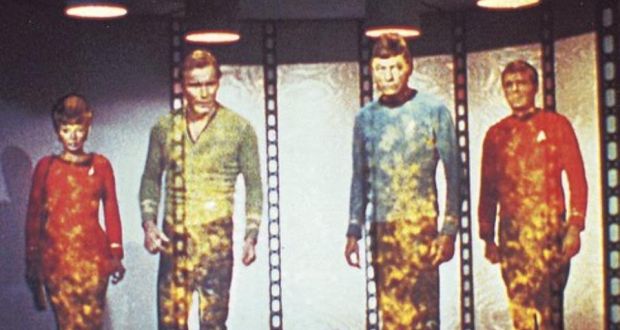
Star Trek-style “beaming up” of people through space could become a reality sometime in the far future, the leader of a landmark teleportation experiment has said.
Nothing in the laws of physics fundamentally forbids the teleportation of large objects, including humans, Professor Ronald Hanson pointed out. In contrast, it is physically impossible for anything to travel faster than light.
“What we are teleporting is the state of a particle,” Prof Hanson, from Delft University of Technology in the Netherlands, said.
“If you believe we are nothing more than a collection of atoms strung together in a particular way, then in principle it should be possible to teleport ourselves from one place to another.
“In practice it’s extremely unlikely, but to say it can never work is very dangerous,” he said. “I would not rule it out because there’s no fundamental law of physics preventing it. If it ever does happen it will be far in the future.”
Prof Hanson’s team showed for the first time that it was possible to teleport information encoded into sub-atomic particles between two points three metres apart with 100 per cent reliability. The demonstration was an important first step towards developing an internet-like network between ultra-fast quantum computers whose processing power dwarfs that of today’s supercomputers.
Teleportation exploits the weird way “entangled” particles acquire a merged identity, with the state of one instantly influencing the other no matter how far apart they are.
Giving one particle an “up” spin, for instance, might always mean its entangled partner has a “down” spin — theoretically even if both particles are on different sides of the universe.
Albert Einstein dismissed entanglement, calling it “spooky action at a distance”, but scientists have repeatedly demonstrated that it is a real phenomenon.
In Prof Hansons’ experiment, three entangled particles — a nitrogen atom locked in a diamond crystal and two electrons — were used to transfer spin information a distance of three metres. Four possible states were transmitted, each corresponding to a “qubit”, the quantum equivalent of a digital “bit”. Each “bit” of information in a classical computer represents one of two values, normally zero or one. But a “qubit” can represent a zero, a one, or a “superposition” of both states at the same time.
The research is published in the latest online edition of the journal Science.
Prof Hanson said: “The main application of quantum teleportation is a quantum version of the internet, extending a global network that we can use to send quantum information.
“We have shown that it’s possible to do this, and it works every time that you try.
“It provides the first building block of the future quantum internet.
“One application nearest to a real life application is secure communication. “What you’re doing is using entanglement as your communication channel. “The information is teleported to the other side, and there’s no way anyone can intercept that information. “In principle it’s 100 per cent secure.”
A more ambitious experiment, involving the teleportation of information between buildings on the university campus 1,300 metres apart, is planned in July. It is hoped this will answer Einstein’s main objection to teleportation, the possibility that a signal passes between entangled particles at the speed of light.
“I believe it will work,” said Prof Hanson. “But it’s a huge technical challenge - there’s a reason why nobody has done it yet.”

Reviving the Ancient Polymath Spirit to Meet Modern Challenges We can embrace interdisciplinary learning for innovative problem-solving. Posted January 16, 2025 | Reviewed by Gary Drevitch

  by   Nigel R. Bairstow Ph.D. Disconnection Dynamics Psychology Today Key points Ancient Arab polymaths excelled by integrating diverse kno...